

 MP3 1694 mb.
Merceditas Valdes - Ache mp3
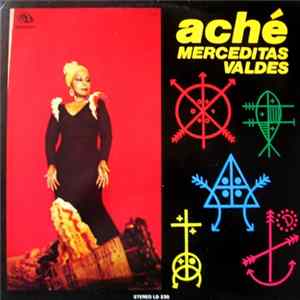
Performer: Merceditas Valdes
Title: Ache
Country: Cuba
Catalog Number: LD 230, LD-230
Label: Siboney , Siboney
Released: 1982
Style: Afro-Cuban
Rating: 4.1
Votes: 457
Tracklist
| 1 | QuirinoWritten-By – Eliseo Grenet, N. Guillén | 3:24 |
| 2 | Ochún | 3:54 |
| 3 | OgúnWritten-By – Folklórico | 4:20 |
| 4 | YambambóWritten-By – Grenet, Guillén | 3:40 |
| 5 | ObataláWritten-By – Folklórico | 4:24 |
| 6 | Lacho | 3:16 |
| 7 | Drume NegritoWritten-By – Ernesto Grenet | 3:58 |
| 8 | ChangóWritten-By – Folklórico | 3:00 |
| 9 | Mango Mangué | 4:00 |
| 10 | EleguáWritten-By – Folklórico | 5:26 |
Versions
| Category | Artist | Title (Format) | Label | Category | Country | Year |
|---|---|---|---|---|---|---|
| C.D. 010 | Merceditas Valdes | Ache (CD, Album) | Artex | C.D. 010 | Canada | Unknown |
Credits
- Design – Suitberto Goire
- Directed By [Director Musical] – Guillermo Barreto
- Engineer – Oscar Perez
- Ensemble – Tambores Batá
- Ensemble [Grupo] – Isupo Iraguo
- Liner Notes – Nancy Robinson Calvet
- Mastered By – Alom
- Musician – Elio Valdés, Guillermo Barreto, Miguel O'Farrill, Orlando "Cachaíto" López, Tata Güines
- Musician, Guiro – Gustavo Tamayo
- Musician, Leader [Isupo Iraguo, Los Tambores Batá ] – Jesus Perez
- Musician, Piano – Frank Emilio
- Photography By – Armando Mitchel, Gloria Figueras
- Producer – Rodulfo Vaillant
- Vocals – Merceditas Valdes
Notes
Tracks A3 and B1 credited as being "D.R."
Barcodes
- Matrix / Runout: LD-230-A- ALOM
- Matrix / Runout: LD-230-B- ALOM
Companies
- Record Company – Empresa De Grabaciones Y Ediciones Musicales (Egrem)
Video
Album
Under the aegis of ethnomusicologists Fernando Ortiz and Obdulio Morales, Valdés helped popularize Afro-Cuban music throughout Latin America. In 1949, she became one of the first female Santería singers to be recorded. Her debut album was released at the start of the 1960s, when the Cuban government nationalized the record industry. 10 tracks 38:10. Elegua, 05:25. Quirino, 03:24. added date. Album 2018 10 Songs. Latino 2018. It was a return to recording after a long absence from the studio, and the first of four albums of Yoruba-roots influenced music. The album won an EGREM prize. Aché is the Cuban spelling of Ase the Orisha term for life power, and Valdés herself was sometimes known by the nickname Little Aché. Después del merecido reconocimiento obtenido por Aché I, ganador en su categoría del Premio EGREM 1987 enfocado hacia el tema afrocubano y la canción de cuna . Aché album. For the Foetus album, see Ache album. Después del merecido reconocimiento obtenido por Aché I, ganador en su categoría del Premio EGREM 1987 enfocado hacia el tema afrocubano y la canción de cuna,. Lorand Matory Black Atlantic Religion: Tradition, Transnationalism, and Matriarchy - 2009 1400833973 the same word, aché, is widely used and understood among nd Cuban-influenced oricha worshipers in the United States and :he Caribbean basin. 5 star 0